
Home › Guides › How much a battery saves by charging on cheap night rates
BatteriesHow much a battery saves by charging on cheap night rates
Filling a battery cheaply overnight and running the house from it in the evening is the whole commercial case for owning one. This page works out what that is worth in a year, including the losses most quotes leave out.
Updated 4 August 2026 · written by the Clearline guidance team

The spread, in one number
Charge a battery from the grid at an 8p off peak rate, use that electricity in the evening instead of buying at the capped average of 26.11p per kWh, and you keep roughly 17p for every usable kWh that comes back out. The gross spread is 18.11p. Round trip losses take about a penny of it. Everything else on this page is either where that penny goes or how many times a year you can repeat the trade.
The number that matters is per usable kWh, not per kWh bought
A battery does not give back everything it takes in. Buying 10 kWh at 8p costs 80p, and if 9 kWh comes back out then the effective cost of what you actually used is 8.9p per kWh, not 8p. Against the 26.11p capped rate that is a net saving of 17.2p on every unit the battery delivers.
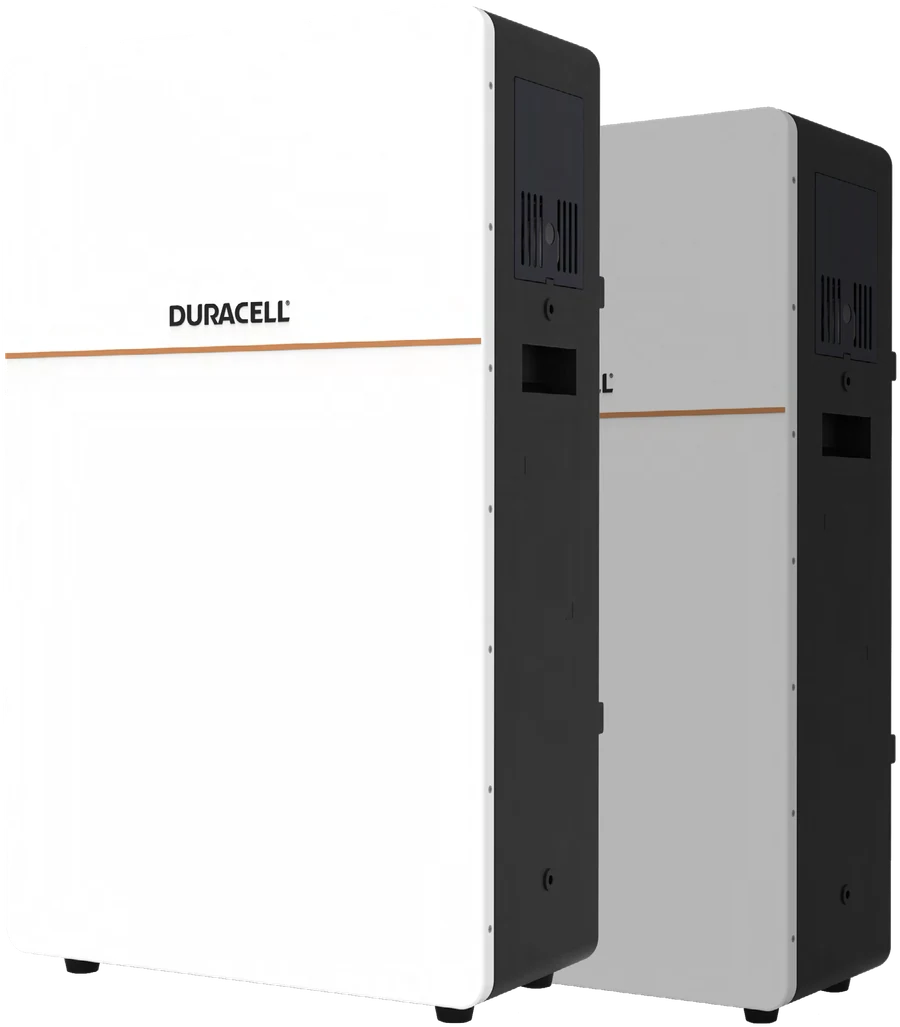
- Usable energy
- 28.8 kWh
- Max power
- 13.2 kW combined
- Cycles
- 8,000
Where the losses happen
Round trip efficiency is the share of energy that survives the journey in and out of the battery. Three things take a cut: converting AC from the grid into DC for the cells, converting DC back to AC for the house, and the standing draw of the battery management system, cooling and inverter idle. Together they are worth 6 to 10 per cent, and the biggest variable is how the battery is wired. A DC coupled battery shares a hybrid inverter with the solar array, so grid charging passes through fewer conversions. An AC coupled battery, which is what most retrofits use because it bolts onto working solar without replacing the existing inverter, runs one more conversion each way. The gap is about two percentage points, worth roughly £25 a year on a 10 kWh battery cycled daily. That is a tiebreaker between two new quotes, not a reason to rip out a working inverter.

| Coupling | Typical round trip loss | Effective cost per usable kWh at 8p | Net saving against 26.11p |
|---|---|---|---|
| DC coupled, hybrid inverter | 6 to 8% | 8.5p to 8.7p | 17.4p to 17.6p |
| AC coupled, retrofit | 8 to 10% | 8.7p to 8.9p | 17.2p to 17.4p |
Loss ranges come from published UK AC and DC coupling comparisons. The cost and saving columns are our own arithmetic on an 8p off peak rate against the Ofgem capped average unit rate of 26.11p per kWh for July to September 2026. Standing charges are excluded because you pay them either way.
What a full year actually looks like
Annual saving is usable capacity multiplied by how many times you fill and empty it, multiplied by the spread. The mistake in most quotes is the middle term. A battery that also takes free solar in summer, and that sometimes reaches morning with charge still in it, does not manage 365 full cycles. Three hundred full cycle equivalents a year is a fair working assumption.
| Usable capacity | Full cycles a year | kWh shifted | Saving at 17.2p per kWh |
|---|---|---|---|
| 5 kWh | 300 | 1,500 | £258 |
| 5 kWh | 365 | 1,825 | £314 |
| 10 kWh | 300 | 3,000 | £516 |
| 10 kWh | 365 | 3,650 | £628 |
| 13.5 kWh | 300 | 4,050 | £697 |
| 13.5 kWh | 365 | 4,928 | £848 |
Our arithmetic, at the AC coupled net saving of 17.2p per usable kWh. The 365 rows are a ceiling rather than a forecast: they assume a full charge and a full discharge every single day of the year, which almost no household achieves.
The honest band
Across battery sizes and real household patterns, off peak charging is worth roughly £280 to £750 a year. The table above sets the hard ceiling, and it is lower than most sales pitches imply: even a 13.5 kWh battery cycled fully on all 365 days of the year only reaches £848, and a 10 kWh battery on the same punishing schedule reaches £628. Anyone quoting the top of that range for a 5 kWh unit is quoting a ceiling as if it were an average.
Put that against the money. Installed battery cost sits at roughly £400 to £900 per kWh, so a 10 kWh system lands somewhere between £4,200 and £6,500, and standalone batteries fitted without solar are quoted at around £4,000 to £5,000 for that capacity. Battery storage also carries 0 per cent VAT until 31 March 2027, reverting to 5 per cent on 1 April 2027, and that relief covers retrofits and standalone batteries as well as new solar and battery installations. A 10 kWh battery saving £516 a year on off peak charging alone pays for itself in eight to thirteen years, which matches the published payback ranges. Our battery storage guide covers the capacity and backup side of that decision.
Bring a year of your own consumption to a free design call and we will run the off peak case, the solar case and the combined case side by side, with the assumptions written down.
Get your free quote →The catch: qualifying for 8p in the first place
The cheap rates that make this arithmetic work are attached to electric vehicles, not to batteries. Intelligent Octopus Go quotes from 8p per kWh with a guaranteed window of roughly 23:30 to 05:30, and the cheap rate applies to the whole house during that window, batteries included. E.ON Next Drive Smart quotes 8p per kWh from midnight to 6am, also whole home. Both require a compatible electric vehicle or charger and a smart meter with half hourly readings.
- No smart meter, no tariff. Time of use rates cannot be applied without half hourly metering, so this is the first thing to fix.
- No EV, fewer options. A battery on its own rarely unlocks the 8p tier. If getting a car charger fitted is what opens it up, our EV charging guide covers what that involves.
- Economy 7 is the fallback, and a weaker one. Night rates averaged 15.43p per kWh in April 2026, with the cheapest around 12.5p. At 15.43p and a 10 per cent round trip loss the net saving falls to about 9p per usable kWh, roughly half the return.
- The window has to be long enough. A six hour window at a 3 kW charge rate puts 18 kWh in. That is ample for a 10 kWh battery and tight for a 20 kWh one.
Which windows exist, which appliance unlocks each one, and the solar and battery tariffs built around them, are set out in off peak tariffs and battery charging. Tariff conditions move faster than anything else in this market, which is why our tariff guidance carries the date it was last checked, and why the county pages under our coverage area carry local calculators that run this arithmetic on regional rates rather than a national average.
How to check your own numbers
Find the gap you are covering
Work out how much electricity your home uses between the end of the cheap window and the start of the next one. That figure, not your total daily usage and not your roof size, sets the useful battery capacity.
Check the charge rate against the window
Multiply the battery's charge rate in kW by the hours in the cheap window. If the answer is smaller than the usable capacity, you cannot fill it overnight and the top slice of the battery never earns.
Use the rate you actually qualify for
Model 8p only if you meet the tariff conditions. Otherwise model the Economy 7 night rate and expect roughly half the annual figure.
Apply the loss, then multiply
Divide the off peak rate by the round trip efficiency, subtract that from your standard unit rate, and multiply by the kWh you expect to shift in a year.
What breaks the maths
- Exporting what you bought. Electricity charged from the grid and pushed back out is not covered by the Smart Export Guarantee obligation. Suppliers may pay for it, but they are not required to, and terms differ by tariff. Confirm before you plan a charge low, export high strategy.
- Throughput clauses. Some warranties cap total energy through the battery as well as the number of years. Heavy daily grid cycling is exactly the pattern those clauses are written for, so read the throughput figure, not just the headline term.
- Summer competition. From roughly May to August the battery should be filling from the roof for nothing, so grid charging contributes far less. The off peak case is strongest in winter, which is precisely when the solar case is weakest.
- The cap moves. The 26.11p figure is the July to September 2026 capped average and it is reviewed quarterly. If the standard rate falls while the off peak rate holds, the spread narrows and every figure on this page shrinks with it.
Rates verified against supplier and Ofgem pages on 3 August 2026. The 26.11p figure is the Ofgem capped average unit rate for 1 July to 30 September 2026 and varies by region and payment method. Clearline is an independent guidance service and does not sell or fit equipment; installations are carried out by an MCS-certified installation team for your area.
Annual saving questions, answered
Does grid charging affect my battery warranty?
It can. Warranties are usually written as a number of years plus either a cycle count or an energy throughput limit, whichever comes first. Daily grid charging is the heaviest realistic use pattern, so it is the one most likely to reach a throughput cap early. Cycle counts are rarely the problem: at one full cycle a day, a 6,000 cycle limit is over 16 years of use. Read the throughput clause specifically before committing to a charge every night strategy.
Can I get the 8p rate without an electric car?
Usually not. The 8p tariffs are EV products, and both Intelligent Octopus Go and E.ON Next Drive Smart require a compatible vehicle or charger, even though the cheap rate then applies to the whole house including the battery. Without an EV the realistic fallback is Economy 7, where night rates averaged 15.43p per kWh in April 2026 and the best available were around 12.5p. That roughly halves the return per unit.
How much is the round trip loss actually costing me?
Less than most people expect. At a 10 per cent loss, electricity bought at 8p effectively costs 8.9p per usable kWh, so the loss is worth 0.9p per unit delivered. On a 10 kWh battery cycled every day that is about £33 a year. It is real, it belongs in the model, and it is not the thing that decides whether a battery is worth buying.
Can I sell the electricity I charged overnight for more than I paid?
Sometimes, but not by right. The Smart Export Guarantee obligation covers electricity you generated, not electricity you bought from the grid and stored. Suppliers can choose to pay for grid charged exports and some do, on specific tariffs with specific terms. Confirm those terms in writing with your supplier before building a plan around it.
Do I need a smart meter?
Yes. Every time of use tariff depends on half hourly meter readings, so without a smart meter there is no cheap window to charge in and nothing to shift. It is the first thing to sort out and it costs nothing.
Is a bigger battery always better on a cheap night rate?
Only if you can empty it. The saving is per kWh actually shifted, so capacity that never cycles earns nothing while still costing £400 to £900 per kWh to install. A battery sized to the electricity you use between the end of the cheap window and the start of the next one earns on every unit. A battery sized to the roof, or to a sales target, does not.
Does this still work in summer?
It works, but it matters less. In the brighter months the battery should be filling from the roof at no cost, so there is little room left for a grid charge. The off peak case earns its keep from roughly October to March, when solar generation collapses and the battery would otherwise sit idle. That seasonal split is why the two cases should be modelled together rather than separately.
See the numbers next: Tesla Powerwall 3, installed, or what a battery costs.
Figures and specifications in this guide are sourced below and were checked on the date shown. Rates and product specifications change; we confirm the current picture on your free design call.
Sources
- Ofgem, changes to the energy price cap between 1 July and 30 September 2026 (26.11p per kWh average unit rate, 57.19p per day standing charge) ofgem.gov.uk
- Octopus Energy, Intelligent Octopus Go tariff page (from 8p per kWh, 23:30 to 05:30 whole home window) octopus.energy
- E.ON Next, Next Drive Smart tariff page (8p per kWh, midnight to 6am, eligible EV and charger required) eonnext.com
- Published UK comparisons of AC coupled and DC coupled battery round trip efficiency greenreachenergy.co.uk
- Economy 7 night rate tracking, April 2026 average and cheapest available rates energyplus.co.uk
- Solar Energy UK, VAT on solar and battery storage (0 per cent to 31 March 2027, 5 per cent thereafter) solarenergyuk.org
- Which?, Smart Export Guarantee explained, including treatment of grid charged exports which.co.uk
- Installed battery cost ranges per kWh and by system size, UK 2026 kilowatts.uk
Read next
AC coupled or DC coupled? The 60 second answer
AC for retrofits, DC for new installs. The reasoning, the efficiency gap and when the rule flips.
Read the guide →Adding a battery to solar panels you already own
Retrofitting a battery to working solar is straightforward. The paperwork is where people trip up.
Read the guide →Which tariffs are actually built for battery charging
A battery buys cheap and uses dear. The tariff decides how much that is worth.
Read the guide →