
Solar panels and 16 kWh Duracell battery storage
Sixteen kilowatt hours of lithium iron phosphate storage, 14.4 of it usable, made in Gloucestershire and warranted for ten years. Add it to a solar installation and store far more of what your roof makes.
£4,450* installed
Includes standard installation and aftercare support. Subject to survey.
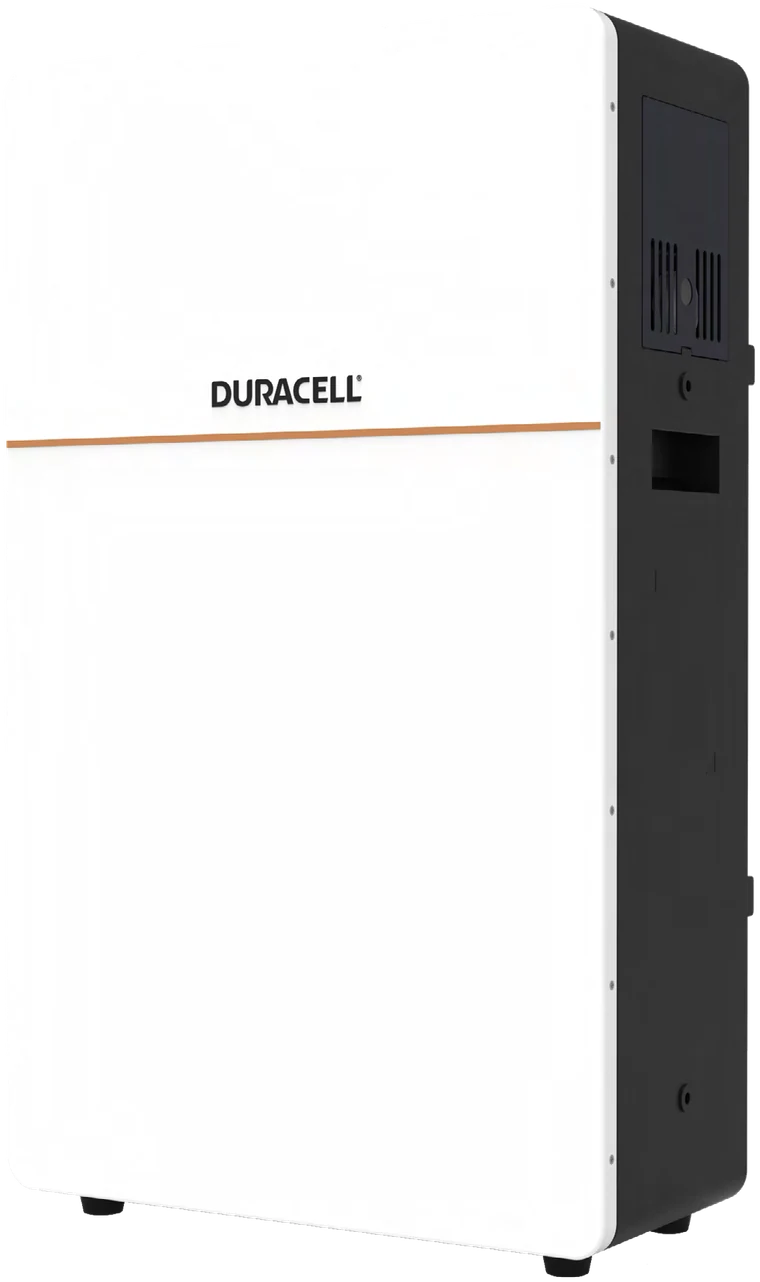


What would 16 kWh of storage do for your bills?
Move the sliders. Nothing is sent anywhere and no email is needed to see the number.

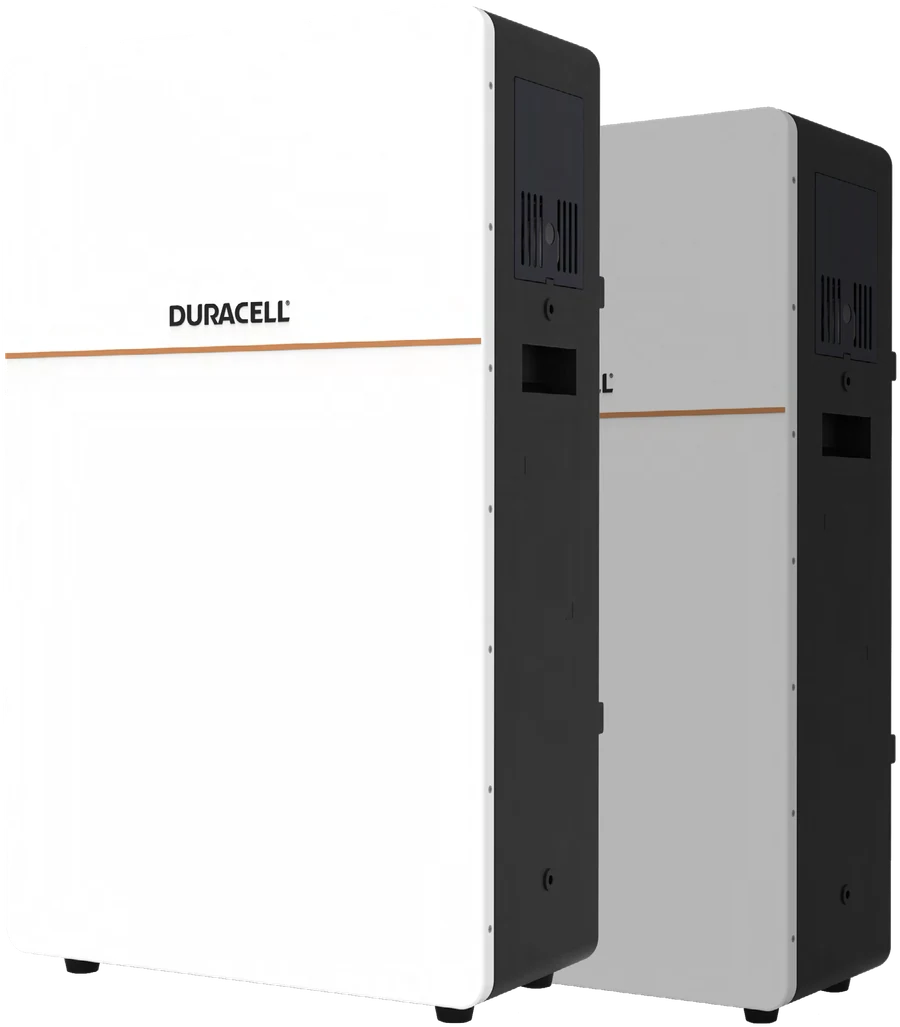
Duracell Dura16 LV
Your real roof, your real usage, on a free video call. No obligation, and no home visit needed.
This is not the company that makes torch batteries
Reasonable confusion, and worth clearing up before anything else. Duracell Energy is a separate business that licenses the Duracell name for home energy storage. The batteries are made and warranty-supported by Puredrive Energy Limited in Toddington, Gloucestershire.
That lineage is the useful part. Puredrive has been building home storage in the UK for years, so what you are buying is a British-made battery with an established manufacturer behind the ten-year warranty, wearing a name you already recognise.
It matters because a warranty is only worth as much as the company standing behind it. That is not a hypothetical in this market, as our guide on what happens when a battery manufacturer fails sets out.
Sixteen kilowatt hours, and what you actually get to use
14.4 kWh usable
The 16 kWh is the total in the cells. 14.4 kWh is what the battery management system will let you take out, which is the number that matters and the number our calculator uses. Any battery quoted only on its gross figure is being quoted flatteringly.
6.6 kW of power
Power is how fast it can move energy, capacity is how much it holds. At 6.6 kW the Dura16 will run an ordinary evening comfortably. It is deliberately less punchy than some rivals, which is a fair trade for the capacity and the price.
Eight thousand cycles
Lithium iron phosphate, rated for 8,000 cycles and 100 MWh through it. Cycle one full charge a day and that is comfortably past the ten-year warranty. It is the chemistry that trades a little energy density for a long, stable life.
Why the Dura16 is rated for 8,000 cycles, from Duracell Energy.
What you see on your phone
The Duracell Energy app shows what the battery is storing and using, and lets you set a charging schedule around your tariff.
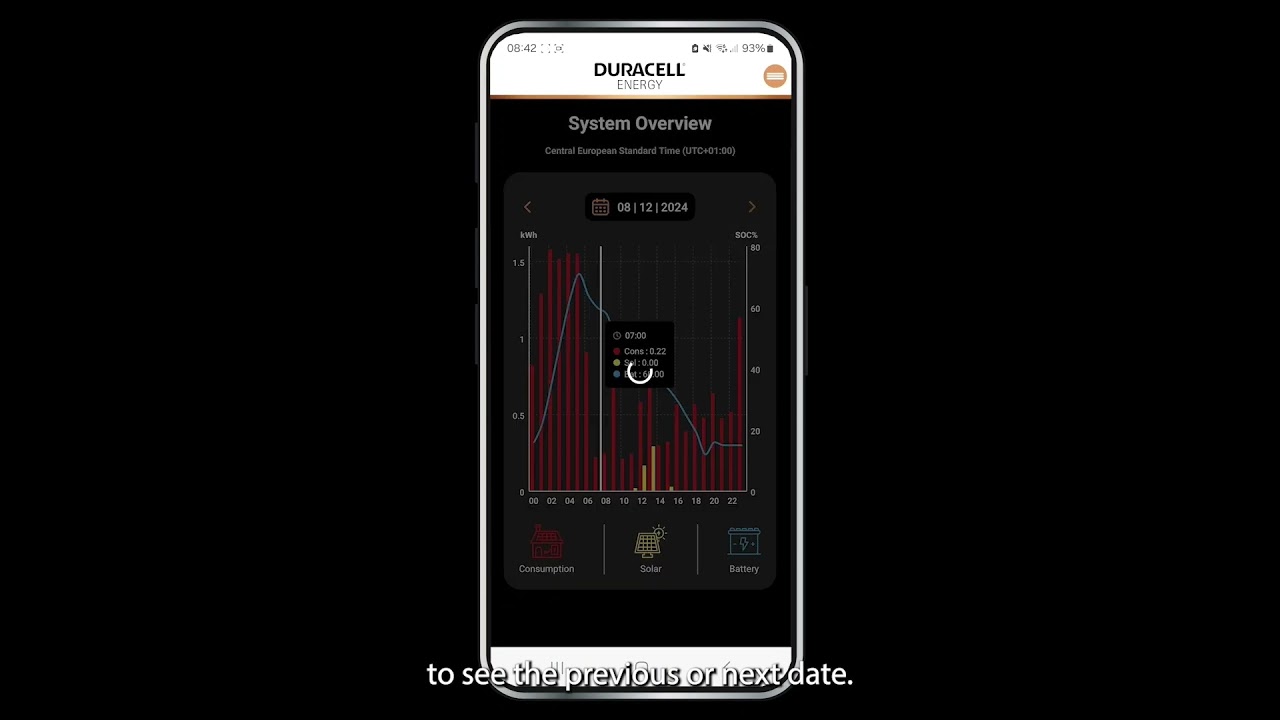
What you see on your phone, from the Duracell Energy channel.
What a Dura16 costs fitted
Our package is £4,450 installed for the Dura16 alongside solar panels, and £8,900 installed for two units giving 28.8 kWh usable.
Almost every price you will find online for this battery is the hardware on its own, at roughly three thousand pounds plus VAT from a trade distributor. That is not a comparable number. It has no installation, no electrical work, no DNO application, no scaffolding where it is needed, no commissioning and no MCS certificate, and it is the certificate the supplier asks for before paying you an export rate.
Both package prices are for a battery installed with solar. A battery on its own is a simpler job with much less variation in it, so rather than publish a number we would immediately have to qualify, your energy consultant confirms it on the call.
How it sits against the rest of the range
What happens in a power cut
Duracell calls it Power Cut Mode: chosen circuits keep running from the battery when the grid goes down. Which circuits it covers depends on how the system is wired at install, and it is worth confirming on your design call rather than assuming whole-home cover.
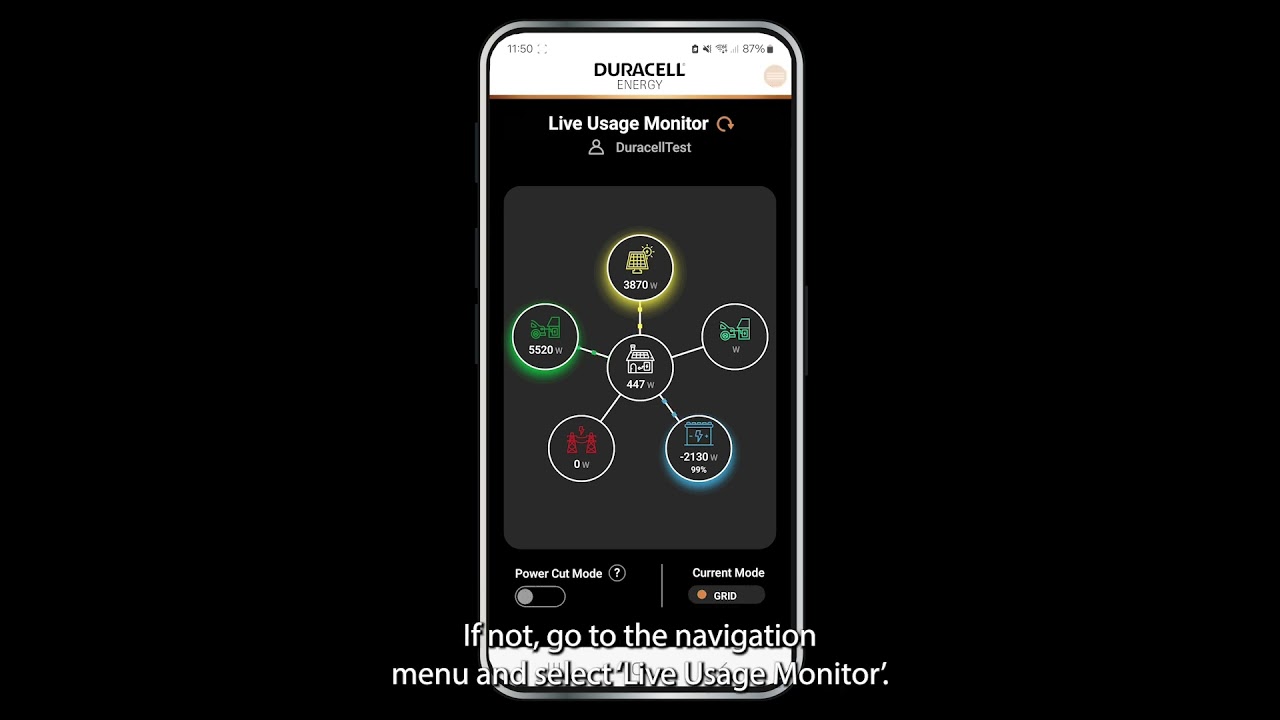
Power Cut Mode in the Duracell Energy app, from the manufacturer.
Can you have 32 kWh?
Yes, as two Dura16 units working in parallel. The datasheet supports up to twelve in parallel, so two is unremarkable.
| One Dura16 | Two Dura16 | |
|---|---|---|
| Usable storage | 14.4 kWh | 28.8 kWh |
| Installed with solar | £4,450 | £8,900 |
| Cost per usable kWh | £309 | £309 |
| Wall space needed | One unit, 520 by 860 mm | Two units, side by side or stacked as the survey allows |
| Weight | 122 kg | 244 kg across two units |
Cost per usable kWh is arithmetic on the two package prices above, not a manufacturer figure. At 122 kg a unit, what the wall is made of is a real question and not a formality, which is one of the things the survey settles.
Before going to 32 kWh, be honest about whether you would cycle it. A second battery only earns its place if you have the evening consumption, or the export rate, to fill and empty it most days. An EV or a heat pump usually justifies it. A quiet two-bedroom house usually does not, and we would rather say so now than after you have paid for it.
Full specification
| Battery module energy | 16 kWh |
|---|---|
| Usable energy | 14.4 kWh |
| Cell technology | LiFePO4 (lithium iron phosphate) |
| Nominal voltage | 51.2 V, 314 Ah |
| Max charge and discharge current | 130 A |
| Max power | 6.6 kW |
| Operating voltage range | 43.2 V to 58.4 V |
| Dimensions, W x H x D | 520 x 860 x 236 mm |
| Weight | 122 kg |
| Installation | Wall-mounted, indoor or outdoor |
| Enclosure protection | IP65 |
| Operating temperature, discharge | minus 20 to 60 C |
| Operating temperature, charge | minus 10 to 60 C |
| Cooling | Natural convection, fanless |
| Cycles | 8,000 |
| Energy throughput | 100 MWh |
| Scalability | Up to 12 systems in parallel |
| Communication | CAN and RS485 |
| Warranty | 10 years |
Source: Duracell Energy Dura16 LV datasheet v1.2 (UK), model PD-16KWH-50V-1G, read 2026-08-20.
The 32 kWh package is two of these units in parallel: 28.8 kWh usable, 13.2 kW combined.
Every installation is carried out by teams holding:






Guides on this topic
Sourced, dated, and written to be read before anyone quotes you.
Adding a battery to solar panels you already own
Retrofitting a battery to working solar is straightforward. The paperwork is where people trip up.
Read the guide →GivEnergy in administration: what owners should do now
The sourced timeline, the warranty position, and the owner's checklist for this month.
Read the guide →Inside a home battery: capacity, power and losses
Usable capacity, kW output, round trip losses and chemistry, in plain terms.
Read the guide →Does a standalone battery actually pay back?
No panels means one job: buy cheap, use later. The tariff decides whether it pays.
Read the guide →How much a battery saves by charging on cheap night rates
What charging at 8p and using at 26.11p is actually worth over a year.
Read the guide →Sigenergy SigenStor review: the 5-in-1 tower examined
The 5-in-1 tower reviewed by a site that does not sell it, warranty arithmetic included.
Read the guide →Duracell Energy questions, answered
Is this the same Duracell that makes AA batteries?
No, and it is worth being clear about. Duracell Energy licenses the Duracell name for home energy storage. The Dura16 is manufactured and its warranty supported by Puredrive Energy Limited in Toddington, Gloucestershire. Duracell Batteries BV and Duracell U.S. Operations are not involved in designing, making, marketing or distributing it.
How much does the Duracell Dura16 cost installed?
Our package is £4,450 installed for the Dura16 alongside solar panels, and £8,900 for two units giving 28.8 kWh usable. Online prices of around three thousand pounds are the hardware alone from trade distributors, with no installation, electrical work, DNO application, commissioning or MCS certificate included.
What is the difference between 16 kWh and 14.4 kWh?
16 kWh is the total energy in the cells. 14.4 kWh is what the battery management system allows you to use, which protects the cells and is why the warranty runs to 8,000 cycles. Always compare batteries on usable energy, because that is the figure that does the work.
Can it go outside?
Yes. It is rated IP65 and the datasheet lists it for indoor or outdoor installation, with a charging range down to minus 10 Celsius. It is fanless, so there is no noise wherever it goes. The practical constraints are usually the wall and the 122 kg, not the weather.
Does the Dura16 work without solar?
Yes. On its own it fills from cheap overnight electricity and runs your home through the expensive hours, a real and growing setup. Our £4,450 package price is specifically for an installation alongside solar panels, so a battery-only price is confirmed on your design call rather than published here.
What is the Duracell Dura16 warranty?
Ten years, with the battery rated for 8,000 cycles or 100 MWh of energy through it, whichever comes first. Your written quote sets out the exact terms for the unit they propose, and it is worth reading the retained-capacity figure rather than only the number of years.
Who supports the Duracell Energy warranty?
Puredrive Energy Limited, the Toddington, Gloucestershire company that manufactures the Dura16 under licence from Duracell. Duracell Batteries BV and Duracell U.S. Operations are not involved in designing, making or distributing the battery, so the ten-year warranty sits with Puredrive, an established UK home-storage manufacturer, not with the Duracell name on the box.
Can two Dura16 units be paired?
Yes. Our "Dura32" package is two Dura16 units working in parallel, giving 28.8 kWh usable for £8,900 installed. It is Clearline’s name for the pairing, not a Duracell model: the datasheet supports up to twelve units in parallel, so two is well within its design. A second unit only earns its place if you have the daily use to fill and empty it.
How does it compare with a Tesla Powerwall 3?
More storage, less power. The Dura16 holds 14.4 kWh usable against the Powerwall 3’s 13.5 kWh, but moves it at 6.6 kW against up to 11.04 kW, and the Powerwall has a solar inverter built in while the Dura16 needs a separate hybrid inverter. Which is better depends entirely on your house. Our page on the Tesla Powerwall 3 sets out its side.
Get your free quote
Takes about two minutes. We work out your options, then confirm your free remote design call, on video, at a time that suits you. It starts with your roof and your numbers, and the design is built around them rather than around a product someone needs to shift.