
Home › Guides › Adding a battery to solar panels you already own
BatteriesAdding a battery to solar panels you already own
Retrofitting a battery to an existing array is one of the most straightforward upgrades in home energy, and one of the easiest to get wrong on paperwork. Here is what actually changes.
Updated 4 August 2026 · written by the Clearline guidance team

On this page
Yes, you can, and you probably should
An array installed before batteries were affordable is doing half a job. It generates well in the middle of the day when the house is empty, exports the surplus for whatever the export tariff pays, then buys that same energy back at the capped rate of 26.11p per kWh when everybody gets home. A battery closes that loop without touching a single panel.
The retrofit route is well trodden and the economics are usually better than they look, because the expensive parts of a solar installation are already paid for. Scaffold, roof work, the array itself and the original grid connection are all behind you.
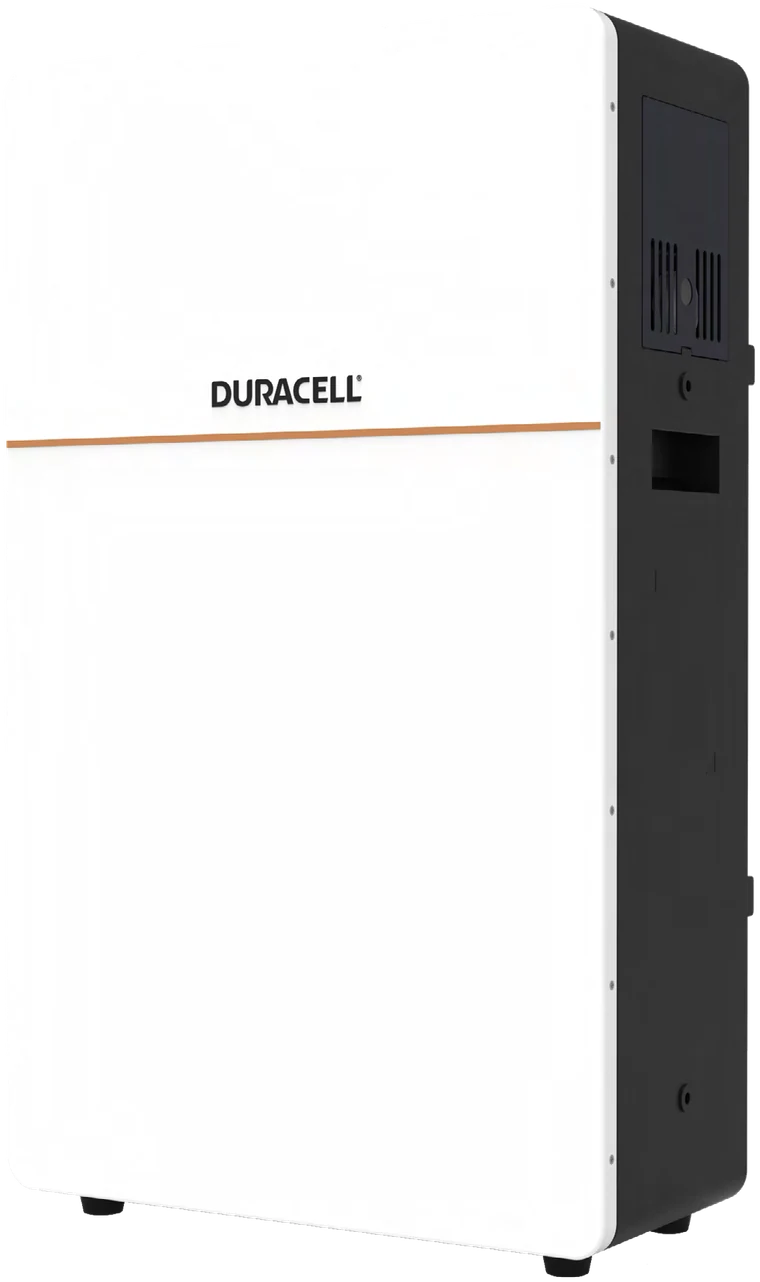
- Usable energy
- 14.4 kWh
- Max power
- 6.6 kW
- Installation
- Wall-mounted, indoor or outdoor
Almost every retrofit is AC coupled
An AC coupled battery brings its own inverter and charger and connects on the AC side of your system. Your existing solar inverter stays exactly where it is, your panels are untouched, and the battery can be sited wherever is practical rather than next to the array.

The alternative is replacing your solar inverter with a hybrid unit and going DC coupled, which is more efficient but only makes financial sense if the existing inverter is old and due replacement anyway. Our guide to AC and DC coupling works through the trade in detail.
Brand of panels is irrelevant
An AC coupled battery never sees your panels. It connects at the AC side, so it works with any array, any inverter brand, and arrays whose original manufacturer no longer trades. That independence is the main reason retrofits are as simple as they are.
The DNO rule that catches retrofits
This is the one thing people are consistently not told before they sign. Your Distribution Network Operator assesses your connection on inverter rating, not on how many kWh your battery stores, and crucially it assesses cumulatively across the whole site.
So if you have a 3.5 kW solar inverter and you add a 3.5 kW battery inverter, the site is now rated at 7 kW. That is well beyond the G98 threshold of 16A per phase, which is 3.68 kW on a single phase supply, and it means the job needs a G99 application approved in writing before installation. Ofgem's connection guaranteed standards give the network operator 45 working days to issue a quotation for a low voltage generation connection, with an £80 failure payment if it misses that, and installers report type tested systems under 50 kW being decided more quickly in practice.
| Route | Threshold | Process | Timing |
|---|---|---|---|
| G98 | Up to 16A per phase, 3.68 kW on single phase | Install first, notify the DNO afterwards | Notification within 28 days |
| G99 | Anything above that threshold | Apply and wait for written approval before work starts | Quotation within 45 working days under Ofgem's guaranteed standards, often decided sooner |
Assessment is on cumulative inverter rating across the site, not on battery capacity.
Ask this before you accept a retrofit quote
What is the cumulative inverter rating after the work, does that need a G98 notification or a G99 application, and who is submitting it? A quote that promises installation in two weeks on a site that needs G99 approval is a quote with a problem in it.
What a retrofit costs in 2026
Installed battery pricing in 2026 runs roughly £400 to £900 per kWh, with the spread driven by brand, coupling, backup specification and how much electrical work the property needs. A retrofit sits inside that band, and often towards the lower half of it because there is no array, no scaffold and no roof work in the price.
For orientation on the products themselves: entry level Fox ESS systems start from around £4,000 installed, Sunsynk systems typically land at £3,500 to £5,000 installed, and a Tesla Powerwall 3 with Backup Gateway is commonly quoted around £7,995 fully fitted. Our 2026 costs guide breaks down where those numbers come from.
The VAT deadline is doing real work here
Battery storage installations carry 0% VAT until 31 March 2027, and that relief explicitly covers retrofit batteries added to existing solar as well as standalone batteries with no solar at all. The extension to standalone and retrofit installations took effect on 1 February 2024.
From 1 April 2027 the rate reverts to 5%. On a typical domestic battery that is worth roughly £225 to £500, which is not the deciding factor on a five figure decision but is a genuine reason not to leave a planned retrofit sitting on a shelf for two years.
Thinking about retrofitting? A free remote design call checks your existing inverter, your DNO position and your tariff before anyone quotes you.
Get your free quote →What to check on your existing system first
Find your inverter rating
It is on the label on the unit and on your original MCS paperwork. This number, not your panel wattage, decides the DNO route.
Check the inverter's age and condition
If it is near end of life, replacing it with a hybrid and going DC coupled turns a repair into an upgrade. If it has years left, leave it alone.
Confirm your export arrangement
Adding storage changes how much you export. Check what your current export tariff pays and whether the terms alter when a battery is added.
Get a year of consumption data
Annual kWh divided by 365 gives the daily baseline that sizes the battery. Guessing at this stage is how people end up with capacity that never cycles.
The export question retrofits raise
A battery reduces what you export, because surplus that used to go to the grid now goes into storage. That is normally a good trade, since avoiding a 26.11p purchase beats earning a flat export rate of 12p. It is worth checking the arithmetic on your specific tariff rather than assuming.
There is a second point that specifically affects battery owners. Grid charged electricity discharged back out to the network is not covered by the Smart Export Guarantee obligation. Suppliers may choose to pay for it, but they are not required to and the terms vary by tariff, so confirm before building any plan around exporting stored grid units. Our tariffs guide covers the current export landscape.
One more consideration on sizing
Retrofit sizing is not simply a matter of matching your array. A battery earns from cheap overnight grid units as well as solar surplus, which is why it keeps working through winter when generation collapses. Sizing to summer surplus alone produces a battery that idles for five months of the year. The sizing guide covers the method.
The battery storage guide covers the product landscape, solar panels covers the array side, and every county page in our coverage area carries a local calculator.
VAT position and prices checked 3 August 2026. Clearline gives independent guidance and a free remote design call. Installations are carried out by an MCS-certified installation team for your area.
Retrofit questions, answered
Can I add a battery to solar panels installed years ago?
Yes. An AC coupled battery connects on the AC side of the system and never interacts with the panels or the existing inverter directly, so the age and brand of the original installation are largely irrelevant. What matters more is the condition of the inverter and the cumulative rating for the DNO application.
Do I have to use the same company that fitted my panels?
No. The retrofit is a separate installation and any suitably qualified installer can carry it out. Clearline gives independent guidance and the work is carried out by an MCS-certified installation team for your area, so the original installer being out of business is not an obstacle.
Will adding a battery void my solar warranty?
AC coupling does not touch the array or the existing inverter, so in most cases there is nothing to void. Replacing the inverter for a DC coupled hybrid is a bigger change and worth checking against the original warranty terms before committing.
How much does it cost to add a battery to existing solar?
Installed battery pricing in 2026 runs roughly £400 to £900 per kWh, and retrofits typically sit in the lower half of that band because there is no array, scaffold or roof work involved. Entry level systems start from around £4,000 installed and a Powerwall 3 with Backup Gateway is commonly quoted around £7,995 fully fitted.
Is there VAT on a retrofit battery?
No. Battery storage installations carry 0% VAT until 31 March 2027, and the relief explicitly covers retrofit batteries added to existing solar. From 1 April 2027 the rate reverts to 5%, worth roughly £225 to £500 on a typical domestic installation.
How long does the DNO approval take?
If the cumulative inverter rating stays at or below 3.68 kW on a single phase supply, no advance approval is needed and the installer notifies the network operator within 28 days of the work. Above that threshold the job needs a G99 application approved first. Ofgem's connection guaranteed standards give the operator 45 working days to issue a quotation for a low voltage generation connection, and type tested systems under 50 kW are usually decided faster than that in practice.
See the numbers next: Duracell Dura16, installed, or what a battery costs.
Figures and specifications in this guide are sourced below and were checked on the date shown. Rates and product specifications change; we confirm the current picture on your free design call.
Sources
- AC coupled batteries retrofit to existing solar without replacing the inverter greenreachenergy.co.uk
- Decision rule for retrofit versus hybrid inverter replacement saveenergyuk.co.uk
- G98 and G99 thresholds, 28 day notification, cumulative inverter assessment capture.energy
- DNO approval process for solar and battery storage solarlove.org
- Ofgem connection guaranteed standards: 45 working day quotation timescale for a low voltage generation connection, £80 failure payment connections.nationalgrid.co.uk
- Installed battery costs 2026: £400 to £900 per kWh kilowatts.uk
- Fox ESS entry level system pricing and Sunsynk installed price range solargridcheck.co.uk
- Typical fully fitted price for a Powerwall 3 with Backup Gateway solaradvice.co.uk
- 0% VAT on battery storage to 31 March 2027 including retrofit and standalone, reverting to 5% renewablesexcellence.co.uk
- VAT saving of roughly £225 to £500 versus the 5% rate haboenergy.co.uk
- Grid charged electricity exported from a battery is not covered by the SEG obligation which.co.uk
- Octopus flat Outgoing export rate of 12p per kWh octopus.energy
- Ofgem price cap 1 July to 30 September 2026: 26.11p per kWh ofgem.gov.uk
Read next
Does a standalone battery actually pay back?
No panels means one job: buy cheap, use later. The tariff decides whether it pays.
Read the guide →AC coupled or DC coupled? The 60 second answer
AC for retrofits, DC for new installs. The reasoning, the efficiency gap and when the rule flips.
Read the guide →Choosing a tariff when you have solar, a battery and an EV
Solar, battery and EV want different tariffs. How to work out which one to protect.
Read the guide →