
Home › Guides › Which battery size band does your home fall into?
BatteriesWhich battery size band does your home fall into?
Battery sizing starts with one number off your bill, not with your roof. Here is the arithmetic, the bands most UK homes land in, and why the biggest battery on the quote is rarely the right one.
Updated 4 August 2026 · written by the Clearline guidance team

Start with your annual kWh, not your roof
Find the annual electricity consumption on your last statement or in your smart meter app, and divide it by 365. That single figure, your average daily consumption in kWh, is the foundation of every sizing decision that follows. Roof size, panel count and inverter rating come afterwards.
Most quotes get this backwards. They size the array to the roof, then bolt on whatever battery the installer has in stock. That produces systems where the battery is either full by two in the afternoon with nowhere to put the surplus, or empty by nine in the evening with the house back on the grid at 26.11p per kWh.
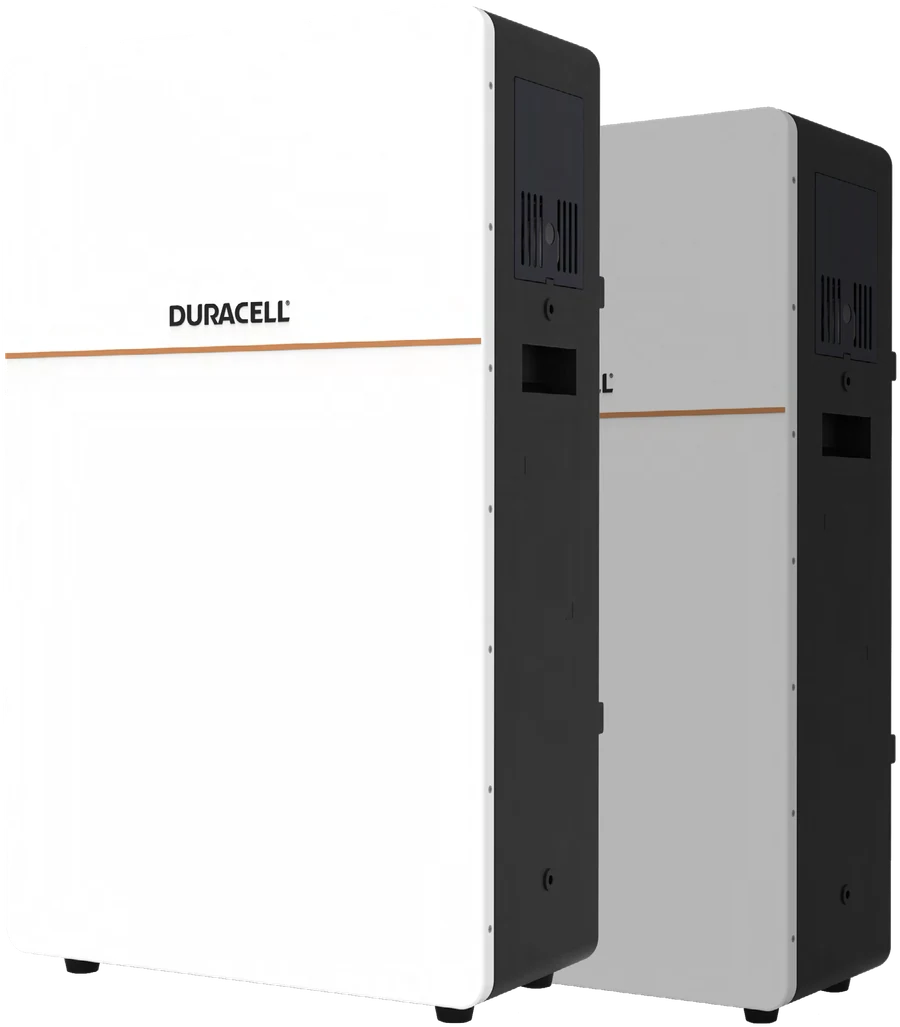
- Battery module energy
- 32 kWh, as two 16 kWh units
- Usable energy
- 28.8 kWh
- Dimensions, each unit
- 520 x 860 x 236 mm
Where UK homes actually land
Ofgem publishes typical consumption values, updated for 2026, that give you a sanity check against your own number. They are averages, so treat them as a bracket rather than a target.

| Ofgem band | Annual electricity | Average per day |
|---|---|---|
| Low user | 1,600 kWh | 4.4 kWh |
| Medium user | 2,500 kWh | 6.8 kWh |
| High user | 3,800 kWh | 10.4 kWh |
Ofgem typical domestic consumption values for 2026. Your own figure from a bill always beats the average.
If your number is well above the high band, something in the house is running on electricity that other homes run on gas. Electric heating, a heat pump, an EV charged at home, or an electric shower used several times a day. Those are exactly the loads a battery earns most against, and they push the sensible size up.
The sizing rule in one paragraph
You are not trying to store a whole day. Solar covers the daylight hours directly, so the battery only needs to cover the part of the day the panels cannot reach: the evening block, the overnight standby load, and the early morning before generation gets going. For most homes that is somewhere between half and two thirds of daily consumption.
Get your daily baseline
Annual kWh divided by 365. A medium user on the Ofgem band is 6.8 kWh a day. Your own statement is better than the band.
Subtract what solar covers directly
Daytime loads that run while the panels are generating never touch the battery. What is left is the block you are sizing for.
Add anything you plan to shift off peak
If you intend to charge the battery from the grid overnight to cover the whole day, size for the whole day rather than the evening.
Check it against a whole year
Winter generation collapses, so a battery sized purely on summer surplus sits half empty for five months. Grid charging keeps it earning year round.
The bands that come out of that
- Most UK homes land between 5 and 10 kWh of usable storage. Daily consumption and how much load you can shift decide the number, not roof area.
- A 5 to 8 kWh usable battery pairs well with a standard 4 kWp array where the battery is mostly soaking up solar surplus.
- A typical three bedroom home getting through around 10 kWh a day suits 10 to 12 kWh of storage for roughly 80% self sufficiency.
- Homes with electric heating or unusually high consumption suit 10 to 15 kWh.
- Choose around 10 kWh if you plan heavy overnight grid charging, because you are then covering evening loads from stored cheap units rather than solar.
The number to write down
Usable capacity, in kWh, that covers your evening and overnight draw. Not nominal capacity, not the number on the brochure, and not the roof. If a quote does not state usable capacity, ask for it before you compare anything.
Why oversizing costs you
A battery only earns when it cycles. Capacity that never fills and never empties is capital sitting still, and it lengthens payback without improving a single bill. This is the most common and most expensive sizing error, and it usually comes from sizing to the roof or to a round number rather than to consumption.
The counterweight is real too. A battery too small to hold the evening means you export surplus cheaply at midday and reimport it expensively at seven, which is the exact trade the battery was bought to avoid. Right sizing beats both, and the gap between the two errors is narrower than most quotes suggest.
Modular systems soften the decision
Several current products stack. Fox ESS EQ modules build from 4.66 kWh each into stacks up to 41.94 kWh, Sunsynk stacks 5.32 kWh modules to 85.12 kWh, and Sigenergy takes 1 to 6 modules per controller for roughly 5.8 to 52.6 kWh. Starting sensibly and adding a module later is cheaper than replacing a whole battery, though the second visit still costs a crew day.
Sizing for power cuts is a different calculation
If backup is part of why you are buying, capacity stops being about bills and becomes about runtime. Divide usable kWh by the average draw of whatever you want to keep running, and you get hours. A 13.5 kWh battery runs a fridge, lighting and broadband for a long time, and the whole house at full draw for a fraction of that. Our guide to whole home versus partial backup works through the arithmetic.
A free remote design call sizes the battery against your real consumption and your tariff, with no obligation and nobody on your doorstep.
Get your free quote →What else moves the number
- Your tariff. A cheap, wide off peak window rewards a larger battery because you can fill it every night.
- Your export rate. A strong export rate makes surplus generation worth something, which reduces the pressure to store every unit.
- Your inverter rating. The DNO assesses your connection on inverter capacity, not battery kWh, so a larger battery does not automatically trigger a G99 application.
- Your space. Batteries need a location with the right temperature range and clearances, and the survey checks that before anything is ordered.
The battery storage guide covers the product landscape, solar panels covers array sizing, and every county page in our coverage area carries a local calculator that runs the same dispatch model against your postcode.
Clearline gives independent guidance and a free remote design call. Installations are carried out by an MCS-certified installation team for your area.
Sizing questions, answered
How do I find my annual electricity usage?
It is printed on your annual statement, and most smart meter apps show it under usage or history. Divide the annual kWh figure by 365 to get your daily baseline. If you have moved recently and only have a few months of data, use the highest full month you have and multiply by twelve for a conservative estimate.
Is 5 kWh enough for a family home?
For a household using around 6.8 kWh a day, a 5 kWh usable battery covers most of the evening and overnight block and will cycle fully almost every day, which is exactly what you want. It becomes tight if you add an EV, electric heating, or plan to run the whole house off peak charged.
Should I size the battery to my solar array?
No. Size it to your consumption. The array determines how much free surplus there is to capture, but the battery earns from both solar surplus and cheap off peak grid units, and the second of those has nothing to do with roof size. Sizing to the array is why so many batteries sit half empty from October to March.
Can I add more capacity later?
On modular systems, yes. Fox ESS, Sunsynk and Sigenergy all build from stackable modules, and Tesla sells expansion units behind the Powerwall 3. Adding later costs less per kWh than the original unit but still involves a return visit, so it is worth getting the first decision close.
Does a bigger battery mean a longer DNO application?
Not directly. The Distribution Network Operator assesses your connection on inverter rating rather than stored kWh. G98 covers up to 3.68 kW on a single phase connection with notification after the work, and anything above that needs a G99 application approved before installation.
What size battery gives 100% self sufficiency?
None, realistically, in the UK. Winter generation is a fraction of summer, and covering the darkest weeks from storage alone would need a battery so large it would sit unused for most of the year. Around 80% self sufficiency is a sensible target for a well sized system, with the balance bought at off peak rates.
See the numbers next: Duracell Dura16, installed, or what a battery costs.
Figures and specifications in this guide are sourced below and were checked on the date shown. Rates and product specifications change; we confirm the current picture on your free design call.
Sources
- Ofgem typical consumption values 2026: 1,600, 2,500 and 3,800 kWh bands kindenergy.co.uk
- Sizing method: annual kWh divided by 365 for a daily baseline iheat.co.uk
- Most UK homes need 5 to 10 kWh of storage, decided by usage not roof size sunsave.energy
- 10 to 12 kWh for a typical three bed home at 10 kWh a day, 10 to 15 kWh with electric heating haboenergy.co.uk
- 5 to 8 kWh usable pairs with a 4 kWp array; 10 kWh for heavy overnight grid charging greenreachenergy.co.uk
- Right sizing beats oversizing: unused capacity extends payback spectrumenergysystems.co.uk
- Fox ESS EQ range module and stack capacities fox-ess.uk
- Sunsynk 5.32 kWh module, stackable to 85.12 kWh powerland.co.uk
- Sigenergy SigenStor module count and stack capacity range myenergy.expert
- G98 and G99 thresholds assessed on inverter rating capture.energy
- Ofgem price cap 1 July to 30 September 2026: 26.11p per kWh ofgem.gov.uk