
Home › Guides › Sigenergy SigenStor review: the 5-in-1 tower examined
BatteriesSigenergy SigenStor review: the 5-in-1 tower examined
The SigenStor is the most talked-about piece of battery hardware in the UK market right now: a stackable tower that puts a hybrid inverter, battery modules, power conversion, energy management and an optional DC EV charger in one column. The engineering deserves the attention. The warranty paperwork deserves more attention than it gets, because Sigenergy's own documents give two different capacity floors and almost no review runs the throughput arithmetic. We do both here, and we should say plainly that Clearline does not sell Sigenergy, which is exactly why you can trust the verdict.
Updated 28 August 2026 · written by the Clearline guidance team

Sigenergy's SigenStor is the battery UK installation teams keep talking about, and it earns the attention. This is a genuinely different piece of hardware, a stackable tower rather than a box on the wall, with an EV charging trick nothing else in the domestic market matches. It also ships with warranty paperwork that gives two different answers depending on which document you read, and almost no review interrogates either. Both halves of that picture belong in a review, so both are here. One declaration before we start: Clearline does not sell Sigenergy, we quote Tesla and Duracell packages, and no commission moves whichever way this verdict lands.
What the 5-in-1 tower actually is
A conventional battery installation is a small collection of separate boxes: a hybrid or battery inverter, one or more battery cabinets, sometimes a backup gateway, sometimes an EV charger on another wall entirely. The SigenStor collapses five of those functions into one vertical stack. The base unit is an energy controller containing the hybrid solar inverter and power conversion electronics. Battery modules stack on top of it and lock together, no cabling between them. Energy management software runs the whole column, and an optional DC EV charging module can slot into the stack as a sixth layer. The result looks less like electrical plant and more like a designed object, which matters more than engineers like to admit when the install location is a garage the family walks through daily.
- Chemistry: lithium iron phosphate (LFP), the same safe, long-life choice as the Tesla Powerwall 3 and the Duracell Dura16.
- Cycle rating: 10,000 cycles at 100% depth of discharge, one of the highest published figures in the domestic market.
- Efficiency: up to 98% claimed, helped by the DC-coupled architecture keeping conversions to a minimum.
- Off-grid muscle: 200% peak output when running disconnected from the grid, useful for motor start-up surges during an outage.
Stack sizing, from 6 kWh to over 50
Battery modules come in 6.0 kWh and 10.0 kWh nominal sizes, 5.84 and 8.76 kWh usable, and one energy controller takes between one and six of them. That spans roughly 5.84 kWh to 52.6 kWh of usable capacity in a single tower, which covers everything from a one-bed flat's evening load to a large all-electric house running a heat pump and two EVs. The inverter range is equally wide: single-phase hybrids from 3.0 to 12 kW and three-phase units from 5 to 30 kW. Two practical notes stop that flexibility running away with you. First, most UK homes are single phase, and any inverter above 3.68 kW needs a G99 application approved by your network operator before installation, so the bigger single-phase units are not a same-week decision. Second, capacity you cannot cycle is capacity you paid for and do not use: a battery sized far beyond your daily consumption plus your off-peak shifting extends payback rather than shortening it.

The EV module party trick
This is the feature no rival matches. An optional DC charging module, rated at 25 kW and bidirectional, slots into the SigenStor stack and charges an EV directly from the battery, the solar array and the grid together. A standard home charger delivers 7.4 kW of AC, limited by your single-phase supply; the SigenStor's module beats that limit because the stored energy in the battery does part of the work, so the car can take on charge more than three times faster without a three-phase upgrade. Bidirectional capability, the V2X part, means a compatible car can also discharge back through the module, effectively adding the car's battery to the house. The caveats are real, though. The module is an extra cost on top of an already premium system, V2X in practice depends on your car supporting it, and the warranty on the EV module is 3 years against the 10 years on the battery and controller. A party trick with a 3-year warranty attached is worth having demonstrated, priced separately, and weighed against a conventional standalone charge point.

The 0 ms backup claim
Sigenergy claims zero millisecond switchover when the grid fails, which is UPS-grade behaviour: the load never sees the outage because the backup path is carrying it continuously. For comparison, dedicated gateway products from other brands typically switch in tens of milliseconds, and basic EPS modes on budget hybrid inverters can take long enough to reboot a router. In honest terms, the difference between 0 ms and a few tens of milliseconds is invisible for nearly every household load; computers, routers and appliances ride through both. Where the distinction earns its keep is medical equipment, sensitive home-lab kit, and the simple confidence of lights that never flicker. If backup is your main reason for buying a battery at all, read our guide to whole home versus partial backup first, because how much of the house stays live matters more than how fast the switch happens.
The warranty small print, read line by line
Search for SigenStor reviews and you will repeatedly read that the battery is warranted to 70% retained capacity at ten years. Sigenergy's own paperwork is less tidy than that. Two warranty documents we could reach give different capacity floors: the SigenStor warranty for the EU states 70% usable energy at ten years, while the Factory Limited Warranty for Europe, revised in April 2025, warrants 60% of usable energy at ten years or a minimum throughput of energy, whichever comes first. The documents alone do not settle which one governs a UK purchase made today, so get the figure for your quote in writing. The April 2025 document lists its throughput caps against named modules: 18.2 MWh on the SigenStor BAT 5.0, with 5.2 kWh of warranted usable energy, and 27.3 MWh on the BAT 8.0, with 7.8 kWh. Those are not the modules in current UK listings, which are the 6.0 and 10.0 kWh generation, so the caps that apply to your exact stack need confirming with the installation team as well.
The throughput arithmetic nobody runs
Take the BAT 8.0 module the April 2025 document names: 27.3 MWh across ten years is about 7.5 kWh a day, against 7.8 kWh of warranted usable energy, which is just under one full cycle a day before the cap, not the retention clock, ends your cover. Both listed modules cap at exactly 3,500 full cycles, roughly a third of the 10,000-cycle rating the marketing leads with. Heavy off-peak arbitrage plus daily solar cycling can genuinely approach that ceiling.
Two further clauses deserve daylight. The warranty requires the system to stay connected to the internet for remote firmware updates, and states that if it remains disconnected for an extended period, Sigenergy may honour only five years of cover instead of ten. And claims must be lodged within 30 days of the failure date or the document treats the right as abandoned. None of this makes the SigenStor a bad product. The cells are rated for far more work than the warranty backs, and the warranty document governs who pays, not when hardware fails. But a 10,000-cycle rating sitting on a 3,500-cycle warranty cap, a retention floor of 60% or 70% depending on which document governs where Tesla warrants 80% in the UK with unlimited cycles for normal use, and a connectivity condition are exactly the sort of terms to weigh before you sign. Our guide to battery warranties and retained capacity shows both Sigenergy figures side by side and explains how to read these documents across every brand.
| Warranty term | Factory limited warranty, April 2025 |
|---|---|
| Battery and energy controller | 10 years |
| Retained usable energy floor | 60% at 10 years |
| Throughput cap, BAT 5.0 module | 18.2 MWh, whichever comes first |
| Throughput cap, BAT 8.0 module | 27.3 MWh, whichever comes first |
| Equivalent full cycles backed | 3,500 on either listed module |
| EV DC charging module | 3 years |
| Offline for an extended period | Cover may reduce to 5 years |
Sigenergy Factory Limited Warranty for SigenStor (Europe), April 2025 revision. It names the BAT 5.0 and BAT 8.0 modules, not the 6.0 and 10.0 kWh generation in current UK listings, and a separate Sigenergy EU warranty document states a 70% retention floor. The document in force on your purchase date governs.
How it compares with our Tesla and Duracell packages
Clearline quotes two battery families, so those are the honest benchmarks. We publish no SigenStor price because Sigenergy hardware is quoted through its own installation network and varies with stack configuration; treat any single figure you read elsewhere with care and get a written quote for your exact stack.

- Usable energy
- 13.5 kWh
- Solar inverter
- Integrated, 3 MPPTs
- Max solar input
- 20 kW STC
- Battery module energy
- 16 kWh
- Usable energy
- 14.4 kWh
- Cell technology
- LiFePO4 (lithium iron phosphate)
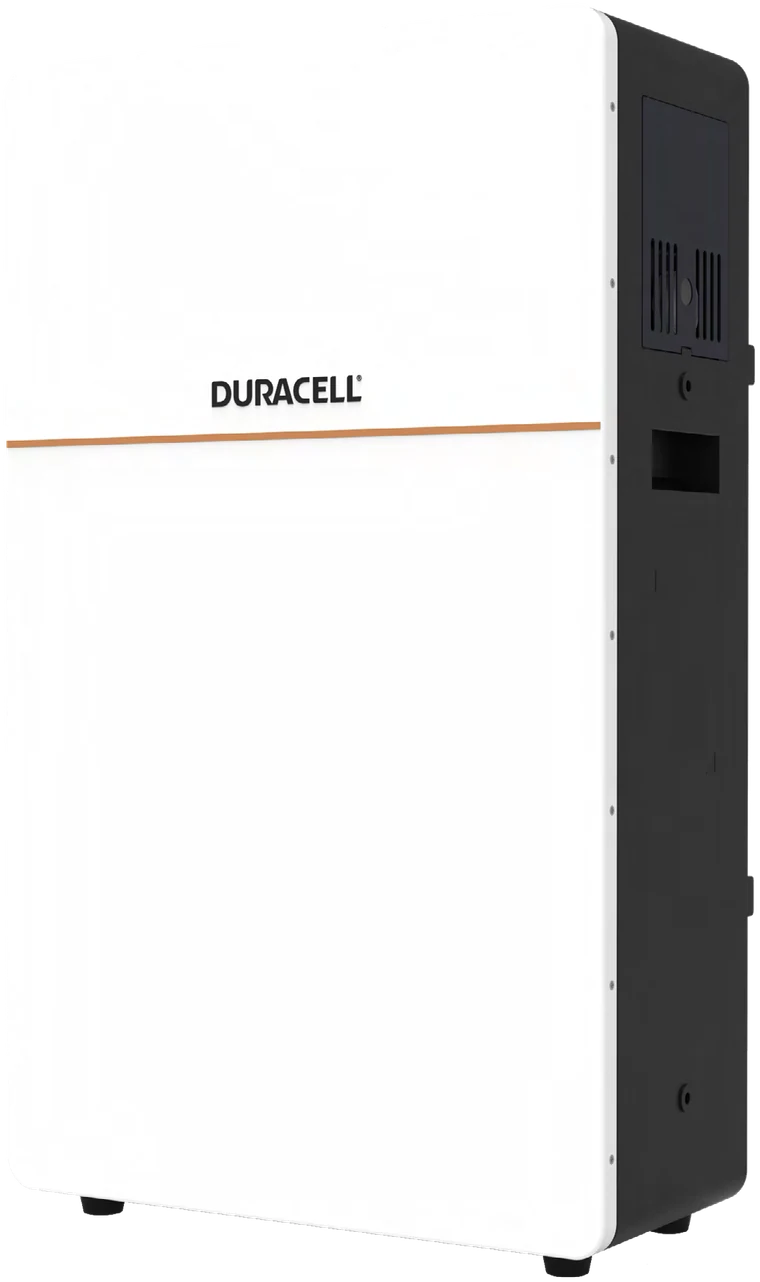
The Tesla Powerwall 3 package starts from £6,350 installed for 13.5 kWh usable, around £470 per usable kilowatt hour, with the strongest warranty promise in the market: 80% retention at ten years and unlimited cycles for self-consumption, time-of-use and backup. The Duracell Dura16 is the value play at £4,450 installed when fitted alongside solar, 14.4 kWh usable, which works out near £309 per usable kilowatt hour. Where the SigenStor wins is integration and headroom: one stack, one warranty counterparty for inverter and battery, capacity growth to 52.6 kWh without rewiring, and the only 25 kW DC EV option in the domestic market. Where it loses is warranty depth against Tesla; and if the deciding metric is cost per usable kilowatt hour, the Duracell package sets a benchmark a premium integrated tower is not built to chase. Until 31 March 2027, 0% VAT applies to all of them.
Who should consider a SigenStor
- Large or all-electric homes, especially on three-phase supplies, where the 50 kWh headroom and big hybrid inverters fit a real load rather than an imagined one.
- EV households wanting DC charging without a three-phase upgrade, provided the module's price and 3-year warranty are weighed against a standalone 7.4 kW unit.
- Backup-critical homes where the 0 ms switchover and 200% off-grid peak output justify a premium over ordinary EPS behaviour.
- Not the budget buyer: if the job is simply storing cheap overnight electricity, a Dura16 alongside solar does it for materially less per kilowatt hour.
- Not the heavy cycler who skims warranties: anyone planning aggressive daily arbitrage should read the warranty's throughput caps, 3,500 full cycles on the modules it lists, before choosing this over a Powerwall's unlimited-cycle terms.
If you are holding a SigenStor quote, or deciding between it and a Powerwall or Duracell package, a free remote design call runs all three against your actual usage, tariff and phase supply. It is a video call, not a home visit, and the advice does not depend on which box wins.
Get your free quote →For the wider field, our home battery brand comparison sets the SigenStor alongside Fox ESS, Sunsynk, Enphase and the rest, and the Powerwall 3 versus the alternatives guide goes deeper on the head-to-head most buyers actually face.
SigenStor questions, answered
What does the Sigenergy battery warranty actually guarantee?
Sigenergy publishes more than one warranty document, and they disagree. The Factory Limited Warranty for Europe, revised April 2025, warrants 60% of usable energy at ten years or a minimum throughput of energy, whichever comes first: 18.2 MWh on the SigenStor BAT 5.0 module and 27.3 MWh on the BAT 8.0. A separate SigenStor warranty document for the EU states a 70% floor, and the documents alone do not settle which governs a UK purchase today. Note too that the April 2025 document names the BAT 5.0 and 8.0 modules, not the 6.0 and 10.0 kWh generation in current UK listings, so ask your installation team for the warranty covering your exact stack in writing. Cover runs 10 years on the battery and controller and 3 on the EV DC charging module, and the factory document reserves the right to reduce cover to five years if the system is left offline for an extended period.
Is the 0 ms switchover claim real?
It is Sigenergy's published claim, and it describes UPS-grade behaviour: the backup circuits carry the load continuously, so a grid failure causes no interruption at all. Most competing systems switch in tens of milliseconds, which computers and routers usually ride through anyway. Treat 0 ms as a genuine engineering differentiator for the most sensitive loads, and ask the installation team to demonstrate backup behaviour at commissioning whichever brand you choose.
Can a SigenStor charge an electric car?
Yes, through an optional DC charging module rated at 25 kW that slots into the stack, with bidirectional V2X capability. That is more than three times the speed of a standard 7.4 kW home charger, because it draws on the battery and solar as well as the grid. Note the warranty asymmetry: the EV module carries 3 years of cover against 10 on the battery and controller.
How big can a SigenStor system go?
Each stack takes one to six battery modules of 6.0 or 10.0 kWh nominal on a single controller, so one tower spans roughly 5.84 to 52.6 kWh of usable capacity. Single-phase hybrid inverters run from 3.0 to 12 kW and three-phase units from 5 to 30 kW. Most UK homes on a single-phase supply will sit at the modest end of that range, and anything above 3.68 kW of inverter capacity needs DNO approval before installation.
Does Clearline sell the SigenStor?
No. We quote Tesla Powerwall and Duracell packages, installed by an MCS-certified installation team for your area, so we earn nothing from a SigenStor sale and nothing from talking you out of one. That independence is the point of this review: the spec praise and the warranty criticism carry equal weight because neither moves our numbers.
See the numbers next: Duracell Dura16, installed, or what a battery costs.
Specifications are from the manufacturer and UK installation team listings, read 3 August 2026. The warranty analysis is from Sigenergy's Factory Limited Warranty for SigenStor (Europe), April 2025 revision, read 28 August 2026; a separate Sigenergy EU warranty document gives a different capacity floor, we show both, and the warranty document in force when you buy governs. Tesla and Duracell package prices are Clearline's own current packages. Sigenergy hardware is priced by its installation network and varies by stack configuration, so we quote no figure for it.
Sources
- Sigenergy, Factory Limited Warranty for SigenStor (Europe), April 2025 revision: 60% usable energy at 10 years or minimum throughput (18.2 MWh on BAT 5.0, 27.3 MWh on BAT 8.0) whichever first, warranted usable energy 5.2 and 7.8 kWh per module, 10 years battery and controller, 3 years EV DC charging module, connectivity clause reducing cover to 5 years after extended disconnection https://www.sigenergy.com/uploads/en_download/1744794445345207.pdf
- Clearline guide, battery warranties and retained capacity: two Sigenergy warranty documents reached 4 August 2026 give different capacity floors, 70% usable energy at 10 years in the SigenStor warranty for the EU against 60% in the factory limited warranty, with which governs a UK purchase unresolved; sources within https://clearlinehomeenergy.co.uk/blog/battery-warranties-and-retained-capacity
- MyEnergy Expert, Sigenergy SigenStor overview: module sizes 6.0 and 10.0 kWh nominal (5.84 and 8.76 kWh usable), 1 to 6 modules per controller, usable stack range 5.84 to 52.6 kWh, single-phase inverters 3.0 to 12.0 kW, three-phase 5.0 to 30.0 kW https://myenergy.expert/battery-storage/sigenergy-sigenstor
- Heatable, Sigenergy SigenStor review: module usable capacities, inverter range, 0 ms switchover claim versus typical EPS switch times https://heatable.co.uk/battery-storage/advice/sigenergy-sigenstor-review
- Solartherm UK, SigenStor overview: 10,000 rated cycles at 100% depth of discharge, up to 98% efficiency, 200% peak output off grid https://solarthermuk.co.uk/blog/sigenergy-sigenstor-the-next-generation-of-solar-battery-storage
- Ecoaim, SigenStor battery guide: 5-in-1 architecture and the optional 25 kW bidirectional V2X DC EV charging module https://ecoaim.co.uk/blog/sigenstor-battery-guide-2026/
- Tesla, Powerwall warranty (EMEA): 10 years, 80% capacity retention in the UK, unlimited cycles for self-consumption, time-of-use and backup https://energylibrary.tesla.com/docs/Public/EnergyStorage/Powerwall/General/Warranty/en-emea/Powerwall-Warranty-EN.pdf
Read next
AC coupled or DC coupled? The 60 second answer
AC for retrofits, DC for new installs. The reasoning, the efficiency gap and when the rule flips.
Read the guide →The popular UK heat pump lines, compared on published specs
Outputs, refrigerant, flow temperature and published SCOP, side by side with conditions.
Read the guide →