
Durham, England

Solar and batteries in Durham, sized to your roof.
Twelve panels (6.36 kWp) here make about 5,950 kWh a year for £6,360 installed, designed around your roof on a free 30-minute video call.
Get my free quote
Three details. We call or text within one working day to book your free 30-minute design call, on video or by phone if you prefer.
or call 07782 219224
- Free 30-minute video design call
- Priced before anyone visits
- Installed by our MCS-certified, fully insured teams
Sunlight in Durham, in numbers
PVGIS puts Durham at 935 kWh per kWp a year, 1% above the mean of our 85 county estimates. 69% of it arrives between April and September, peaking in May.
Generation per kWp, month by month
Show the monthly figures
| Month | kWh/kWp |
|---|---|
| January | 31.4 |
| February | 48.6 |
| March | 82.8 |
| April | 108 |
| May | 121 |
| June | 110 |
| July | 117 |
| August | 105 |
| September | 87 |
| October | 57.4 |
| November | 39.3 |
| December | 28.2 |
Source: PVGIS v5.2 (European Commission JRC), SARAH3 database, 1 kWp, 14% system loss, 35 degree pitch, due south, checked September 2026.
Our GB average is 925 kWh per kWp a year, the mean of the 85 county PVGIS estimates we publish; at 935, Durham is 1% above it.
How Durham compares
Durham ranks joint 43rd of the 85 counties we track for solar yield. Self use does the heavy lifting here: of the £848 year one benefit on a typical 12 panel system, £247 comes from replacing 26.32p imports with your own generation, which is why battery sizing matters more than panel count.
These are county-level starting numbers. A town page gives the figure for its own centroid, and your design call replaces both with your roof, its shading and your bills.
The charger is in the installed price but left out of payback: charging savings depend on your mileage and tariff, which the design call models properly.
Your real roof and usage, worked through on a free 30-minute video call. Use the full form or leave three details below.
Price this for your roof
Three details. We call or text within one working day to book your free 30-minute design call, on video or by phone if you prefer.
Generation from PVGIS v5.2 (European Commission JRC, SARAH3), retrieved August 2026 for a representative point in Durham (54.7271, -1.6929), assuming 1 kWp, 14% system loss, 35 degree pitch, due south. Import valued at 26.32p/kWh (Ofgem price cap average, Oct to Dec 2026); off-peak charging at 8.5p/kWh where used (a supplier's published off-peak rate, checked September 2026); export at the scenario you pick, from the dated tariff table. Prices are installed pricing, August 2026, standard installations; 530W LONGi panels at £1,000 per kWp. Estimates for illustration, not a quote: your free design call prices your actual roof.
The network operator for Durham
The centre of Durham sits in Northern Powergrid's North East England licence area on NESO's boundary map, as does every town we cover there, so Northern Powergrid is the network operator (DNO) a system here is registered with.
What decides the paperwork is the inverter and battery output, not the number of panels. Up to 3.68kW per phase, a system follows G98: Northern Powergrid is notified within 28 days of commissioning and nothing has to be approved first.
Above that, G99 means applying before the work is booked. Northern Powergrid publishes a guaranteed standard of 45 working days to quote for a low voltage generation connection.
Sources: NESO DNO licence areas (3 May 2024); Northern Powergrid, generation connections page, checked 25 September 2026. G98 vs G99, explained.

Adding a heat pump or an EV charger in Durham

A heat pump in Durham
In December, the darkest month here, 12 panels in Durham make about 180 kWh. That is when a heat pump runs hardest, so its running cost in Durham comes down to the tariff and the flow temperature rather than the roof.
In England, the Boiler Upgrade Scheme pays £7,500 towards an air source or ground source heat pump and £2,500 towards an air-to-air one, with £1,500 more until March 2027 for homes heated by oil or LPG with no mains gas (gov.uk, checked 28 September 2026).

Charging an EV in Durham
Durham's May output, about 770 kWh from 12 panels, is several times the 70 kWh or so a typical home uses in daylight that month on our calculator's settings. Daytime charging turns that surplus into miles.
Renters and flat owners with private off-street parking can get 75% off a chargepoint and its installation, up to £500 per socket, until 31 March 2027 (gov.uk, checked 28 September 2026). The calculator above adds a 7.4kW smart charger from £1,100 installed.
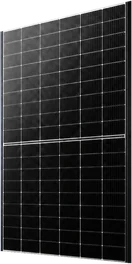
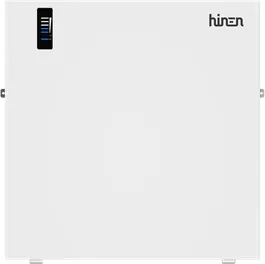
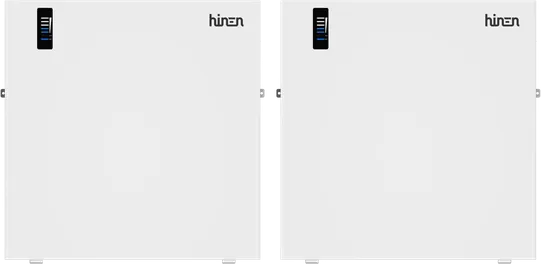
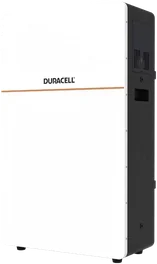
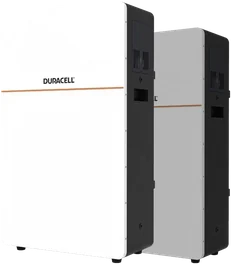
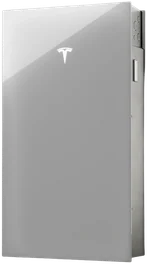
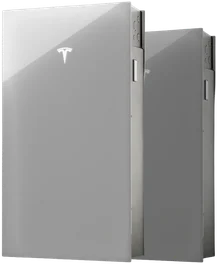
What the named kit costs, installed
Every system is designed around your roof on the free call before anything is fitted.
What else is true of Durham
County Durham's housing is terrace-heavy: 36% of properties, a higher share than the North East region or England as a whole, against 14% bungalows and 15% detached homes, much of the older terraced stock privately rented. That mix generally means compact pitched roofs with two main faces rather than one large expanse, so the better-facing slope, often the rear, tends to set how many panels a terraced home can fit, while the county's detached houses and bungalows usually offer more usable roof area.
Durham sits in Northern Powergrid territory, whose own published figure for a standard low voltage generation quotation is 45 working days, with most single home systems using the quicker 28-day G98 route instead. Durham County Council is the planning authority; with Durham Castle and Cathedral forming a UNESCO World Heritage Site and over 3,000 listed buildings countywide, the council has its own Supplementary Planning Document setting out when listed building consent is needed for solar panels.
The council's Climate Emergency target is for County Durham to reach net zero by 2045, a date it set out after declaring the emergency in the first place. The county has also taken on large-scale generation: Durham County Council granted planning permission for the 49.9MW Bluestone Solar Farm on a former coal mining site near Cockfield, developed by Bluefield Renewable Development, with a £400,000 community fund attached for local residents.
Planning authority: Durham County Council
Sources: durham.gov.uk · durham.gov.uk
Common questions about solar in Durham
How much energy would 12 solar panels make in Durham?
Durham averages 2.56 peak sun hours a day, which PVGIS turns into 935 kWh per kWp a year. On a 12-panel, 6.36 kWp roof that is about 5,950 kWh, 69% of it between April and September.
Is solar more expensive in Durham?
Prices on this site are the same everywhere: £1,000 per kWp installed, which puts a 12-panel system at £6,360 in Durham, and a Duracell Dura16 installed with solar at £4,450 on top. The local part is generation, about 5,950 kWh a year here, which is what drives payback.
Who is the network operator in Durham, and do I need a G99 application?
The operator is Northern Powergrid. Most home systems use the G98 route, a notification within 28 days of switch-on for up to 3.68kW per phase, so nothing waits on the network. Above that, G99 applies and has to be granted first. Northern Powergrid publishes a guaranteed standard of 45 working days to quote for a low voltage generation connection. Your design call checks which route yours needs.
What could I earn from exporting in Durham?
On the 12p export scenario, a 12-panel system in Durham sends about 5,010 kWh a year to the grid, worth around £601. The export rates table compares what each supplier pays.
How does solar perform in Durham in the winter months?
December is the weakest month in Durham: about 180 kWh from 12 panels, against 770 kWh in May. The panels still generate on bright winter days; they just cover a smaller share of what the house uses.
Towns we cover in Durham
35 Durham towns have their own page, each with PVGIS figures, a network operator and a monthly curve for its own location.
Nearby in England
See a number before you speak to anyone
Answer a few questions about your roof and usage and see an instant solar and battery estimate. No email needed to see the result.
Reading for Durham homeowners
The same guidance we would talk through on your call, written down and sourced.
0% VAT on solar and batteries: what qualifies, and what does not
Zero VAT until 31 March 2027, then 5% returns. What qualifies, and what it is worth.
Read the guide →Inside a home battery: capacity, power and losses
Usable capacity, kW output, round trip losses and chemistry, in plain terms.
Read the guide →How time of use charging windows actually work
How a cheap overnight window is metered and billed, and what a battery does inside it.
Read the guide →Do you need to replace your radiators for a heat pump?
Some change, most do not. The room by room arithmetic that decides which.
Read the guide →Why tariff choice moves payback more than kit choice
Identical kit, five times the export income. The tariff decision worked through with August 2026 rates.
Read the guide →MCS, HIES, RECC, NAPIT, TrustMark and Flexi-Orb: which badge does what
Six logos, six different jobs. What each scheme covers, and which are actually required.
Read the guide →Get my free quote
Takes about two minutes. We call or text within one working day to book your free 30-minute video design call at a time that suits you. We design it around your roof and your numbers, and our MCS-certified, fully insured installation teams install it.