
Home › Coverage › Durham › Washington
DurhamSolar panels in Washington,
priced honestly.
Independent guidance on solar and battery storage for Washington homes in Durham: a free remote design call first, then an MCS-certified installation team for your area if you decide to go ahead. PVGIS puts a roof in Washington at 952 kWh per kWp a year, 2% above our Durham county estimate.
Start with your postcode
Free, no obligation. Takes about two minutes, and nobody visits your home.
What a roof in Washington can generate
Real satellite data for Washington, real installed pricing, and the same honest model we run for every place we cover.
How Washington compares
Among the places we publish figures for, Washington is one of 35 Durham towns we track, and it ranks joint 11th of 35 for solar yield. It is a medium town in the House of Commons Library classification, with 51,783 residents, and its roofs see 2.61 peak sun hours a day across the year. That drives the standard 12 panel model to 6,055 kWh of generation, of which around 5,118 kWh is exported at 12p for £614 a year, with £247 saved on electricity you would otherwise buy at 26.32p.
Treat these as calibration rather than a quote. The calculator below runs the same model, defaulted to Washington's own yield, and at Washington's 952 kWh per kWp it prices a 12 panel system at £6,360 installed before any battery. Your free design call reworks every number for your actual roof, its shading and your usage.
Sunderland is the planning authority covering Washington, which the House of Commons Library classes as a medium town.
The charger is in the installed price but left out of payback: charging savings depend on your mileage and tariff, which the design call models properly.
Price this properly, free →Your real roof, your real usage, on a free video call. No obligation.
A 12 panel, 6.36 kWp system in Washington generates around 6,055 kWh a year, worth around £861 in year one on the 12p export scenario.
Generation is modelled from PVGIS satellite data for Washington's own coordinates (54.90288, -1.51691), using the same 26.32p/kWh import value and £1,000 per kWp installed pricing as every Clearline estimate, with the full methodology, sourcing and assumptions set out on our help page.
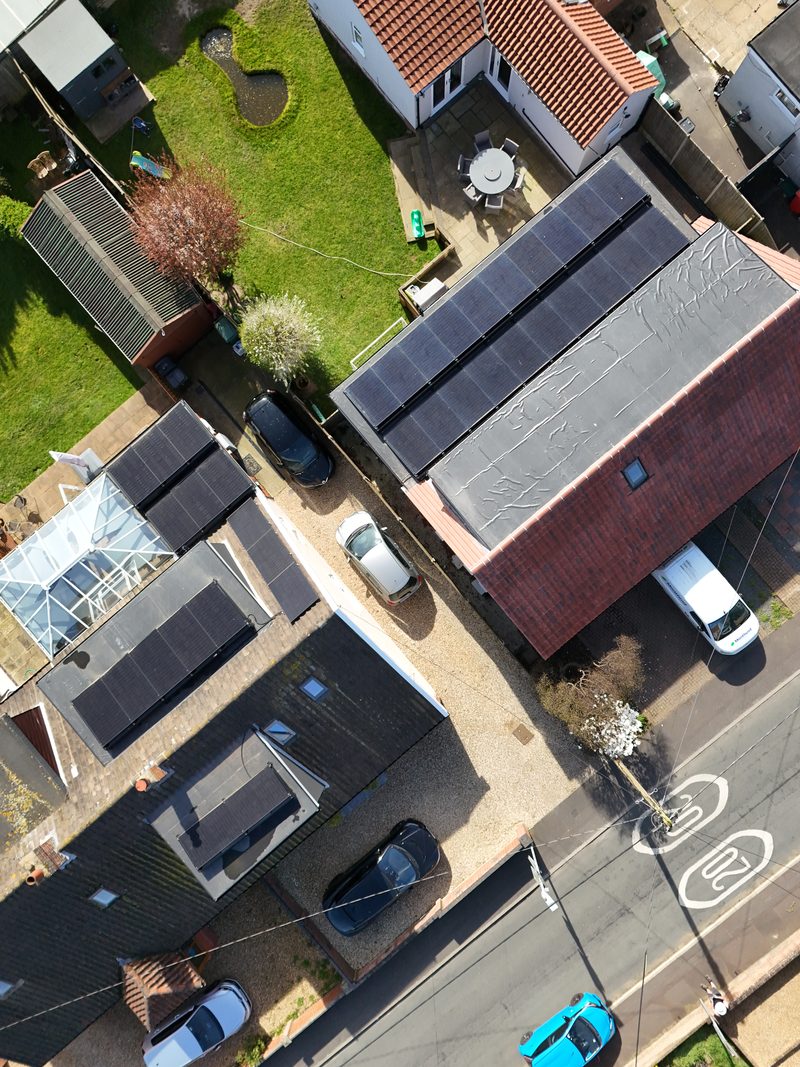
Solar panel servicing and repair in Washington
Faults, servicing and ageing inverters follow the same economics in Washington as anywhere else, and the guides below price them plainly.
Common questions about solar in Washington
What could a roof in Washington generate?
PVGIS puts a roof in Washington at 952 kWh per kWp a year, 2.61 peak sun hours a day averaged across the seasons.
What does a typical solar system cost in Washington?
A typical 12 panel, 6.36 kWp system in Washington costs around £6,360 installed, at £1,000 per kWp before any battery.
Would a system in Washington need a G99 application?
Most home solar and battery systems qualify for the simpler G98 notification, made to the network operator (DNO) after installation rather than before. A minority, usually larger systems, need the fuller G99 process instead. Your design call checks which applies in Washington before anything is booked; our G98 vs G99 guide explains the difference in full.
What could I earn from exporting in Washington?
On the 12p export scenario, that 12 panel system sends about 5,118 kWh a year to the grid, worth around £614. The tariff guide compares the export rates that could apply to your setup.
Get your free quote
Takes about two minutes. We work out your options, then confirm your free remote design call, on video, at a time that suits you. It starts with your roof and your numbers, and the design is built around them rather than around a product someone needs to shift.
Reading for Washington homeowners
Independent, sourced and dated. The same ground we cover on your free call.
East, west or south facing: what your roof direction really costs you
An east west split gives up about a fifth of the annual total, and can still be worth more than south.
Read the guide →GivEnergy in administration: what owners should do now
The sourced timeline, the warranty position, and the owner's checklist for this month.
Read the guide →The main home EV chargers, compared on what actually differs
Eight popular UK home chargers on cable, connectivity, warranty and tariff integration.
Read the guide →Are heat pumps noisy? The 37 dB(A) answer, in plain terms
The 1 metre boundary rule is gone. A 37 dB(A) sound test replaced it.
Read the guide →Why tariff choice moves payback more than kit choice
Identical kit, five times the export income. The tariff decision worked through with August 2026 rates.
Read the guide →Your MCS certificate: what it shows, when it arrives, and how a Smart Export Guarantee supplier uses it
The document your export payments hang on. Who issues it, what it shows, and how to get a copy.
Read the guide →How Washington compares with its neighbours
Same satellite dataset, same assumptions, so the differences are real geography rather than modelling noise.
| Town | kWh per kWp | Peak sun hours | vs Washington |
|---|---|---|---|
| Washington | 952 | 2.61 | — |
| Birtley | 944 | 2.59 | -8 kWh |
| Shiney Row and Penshaw | 959 | 2.63 | +7 kWh |
| Chester-le-Street | 936 | 2.57 | -16 kWh |
| Fence Houses | 948 | 2.60 | -4 kWh |
| Gateshead | 942 | 2.58 | -10 kWh |
| Sunderland | 977 | 2.68 | +25 kWh |
PVGIS v5.2 for each town centroid, identical assumptions throughout. A few kWh either way is weather-year noise; a spread beyond about 30 kWh per kWp is real geography.
Also for Washington: Solar panels in Washington from OVO Solar & Battery